
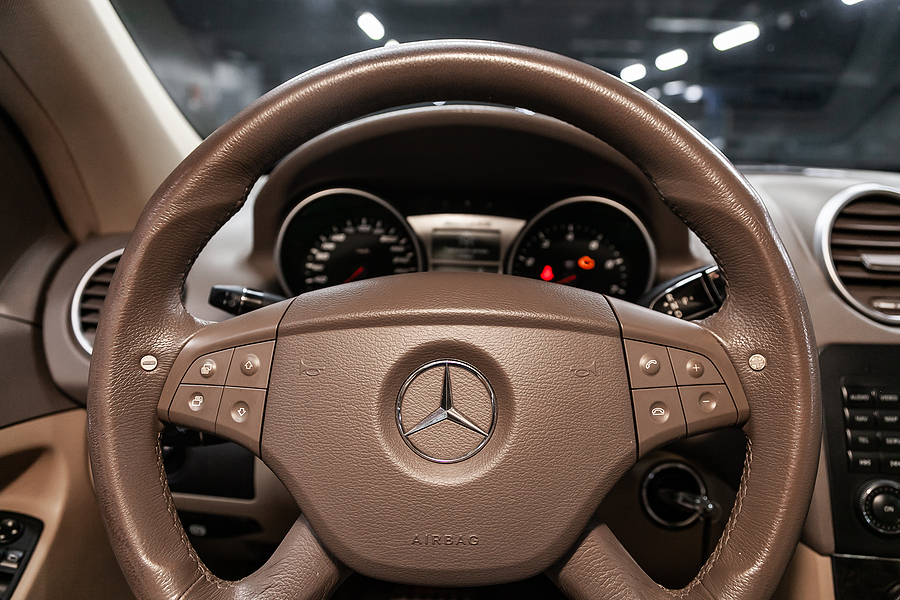
That amber glow on your dashboard can stop you in your tracks. It’s small, but it carries serious weight. When your Mercedes check engine light comes on, it’s not something to brush aside or cover with a piece of tape. It’s your vehicle’s way of telling you something needs attention.
Mercedes-Benz vehicles are engineered with some of the most sophisticated onboard diagnostic systems on the road. That sophistication means when something is off—even slightly—the system knows. The check engine light can signal anything from a minor emissions issue to a problem that, if left alone, could result in costly engine damage.
The good news? Many of the most common triggers are straightforward to diagnose and fix, especially with the right expertise. Here’s what you need to know.
Common Reasons Your Mercedes Check Engine Light Is On
Faulty Oxygen Sensor
The oxygen sensor monitors the composition of your exhaust gases and helps your engine computer regulate the air-fuel mixture. Modern Mercedes-Benz models typically have between two and four oxygen sensors, and when one fails, the engine management system receives inaccurate data.
A faulty oxygen sensor can reduce fuel efficiency, increase emissions, and in serious cases, cause damage to the catalytic converter. These sensors are designed to last 100,000 miles or more, but contamination and heat exposure can shorten their lifespan.
Loose or Damaged Gas Cap
It sounds minor—and sometimes it is. A loose, cracked, or missing gas cap allows fuel vapors to escape from the fuel system, which your Mercedes’s onboard diagnostics interpret as an evaporative emission control system fault (often logged as DTC code P0440 or P0455).
Before panicking, check your gas cap. Remove it, inspect it for damage, and reinstall it until it clicks. The light may take a few driving cycles to reset on its own after the issue is resolved.
Catalytic Converter Problems
The catalytic converter transforms harmful exhaust gases—like carbon monoxide—into less harmful compounds before they exit the tailpipe. When it clogs or fails, your Mercedes will suffer reduced fuel economy, sluggish performance, and a strong sulfur-like smell.
Codes P0420 and P0430 are common catalytic converter fault codes in Mercedes vehicles. Ignoring these can lead to significant damage and considerably higher repair costs down the road.
Mass Airflow Sensor Problems
The mass airflow (MAF) sensor measures the volume of air entering the engine and communicates that data to the engine control unit. When the MAF sensor malfunctions—often due to dust buildup or sensor degradation—the engine may misfire, run rough, or consume more fuel than usual.
The fix can sometimes be as simple as a professional cleaning. Replacement is typically needed around 100,000 miles, and regular air filter maintenance helps extend the sensor’s life.
Spark Plug or Ignition Coil Failures
Worn spark plugs or failing ignition coils can cause engine misfires, reduced power, and poor fuel economy. Spark plug replacement intervals vary by Mercedes model—most C-Class and E-Class models require changes at 50,000–60,000 miles, while AMG models may need them closer to 40,000 miles.
Ignoring ignition issues can eventually cause raw fuel to reach the catalytic converter, leading to far more expensive damage.
Mercedes-Specific Diagnostic Considerations
How the Mercedes Onboard Diagnostic System Works
Mercedes-Benz vehicles use a Controller Area Network (CAN) bus system that connects multiple electronic control units (ECUs)—sometimes exceeding 70 in high-end models like the S-Class. This network continuously monitors critical systems, including engine performance, emissions, fuel delivery, and ignition timing.
When the system detects a fault it cannot correct on its own, it stores a Diagnostic Trouble Code (DTC) and activates the check engine light. To read that code, a technician connects an OBD-II scanner to the diagnostic port, typically located beneath the dashboard.
Why Mercedes May Trigger the Light for Emissions-Related Issues
Mercedes vehicles are particularly sensitive to emissions system performance. Even small deviations from expected parameters in the evaporative emissions system, exhaust gas recirculation (EGR) valve, or oxygen sensors can trigger the check engine light. This sensitivity is by design—it protects the engine and keeps emissions within regulation.
The Importance of Professional Diagnostic Scanning
Generic OBD-II scanners read basic fault codes, but they often miss the full picture on a Mercedes. Mercedes-Benz Xentry diagnostic systems—used by trained technicians—provide complete access to all vehicle systems, real-time data monitoring, and guided diagnostic procedures. That level of detail is critical for an accurate diagnosis the first time around.
What You Should Do When the Light Appears
1. Stay calm and assess your vehicle’s performance. Does the car feel different? Is there a loss of power, rough idling, unusual smells, or strange sounds? Your observations help narrow down the cause.
2. Check your gas cap. It’s one of the most common and easiest-to-fix triggers. A loose cap takes seconds to address and could save you an unnecessary diagnostic visit.
3. Pay attention to light behavior. A steady check engine light indicates a non-emergency issue that should be addressed soon. A flashing check engine light signals a serious fault—pull over when safe and do not continue driving until the vehicle has been inspected.
4. Schedule a professional diagnostic scan promptly. Even if the car seems to be running fine, the underlying fault won’t resolve on its own. Delaying diagnosis risks turning a minor repair into a major one.
5. Limit driving until the issue is identified. Continuing to drive an undiagnosed vehicle—especially if performance is affected—can accelerate damage and increase repair costs.
When to Seek Professional Help
Some situations call for immediate action. Seek professional help right away if:
- The check engine light is flashing while driving
- Multiple warning lights are illuminated at the same time
- The vehicle has entered limp mode (noticeably reduced power or responsiveness)
- You notice unusual sounds, vibrations, or smells
DIY fixes are rarely appropriate for Mercedes vehicles. The proprietary nature of Mercedes diagnostic systems means that without the right equipment and training, it’s easy to misinterpret fault codes, clear lights without fixing the root cause, or create new issues. A certified Mercedes service center use model-specific tools and up-to-date software to diagnose and repair faults accurately.
Frequently Asked Questions
Can I drive my Mercedes with the check engine light on?
A steady light generally means it’s safe to drive short distances, but you should schedule a diagnostic appointment as soon as possible. A flashing check engine light is a different matter—pull over safely and have the vehicle towed to a service center.
How much will it cost to fix a Mercedes check engine light?
Repair costs vary widely depending on the root cause. A loose gas cap costs nothing to fix. An oxygen sensor replacement can run a few hundred dollars, while catalytic converter repair or replacement can be significantly more. A proper diagnostic scan helps identify the issue before committing to any repair.
Will the check engine light turn off on its own?
In some cases—like after tightening a loose gas cap—the light may extinguish after several driving cycles. However, the underlying fault code remains stored in the system until it’s cleared by a diagnostic tool. If the root cause hasn’t been resolved, the light will return.
What’s the difference between a solid and flashing check engine light?
A solid check engine light indicates a non-emergency fault that needs professional attention. A flashing light signals a severe condition—often an active engine misfire—that can cause rapid damage to the catalytic converter and other components. Treat a flashing light as an urgent warning.
Get Your Mercedes Diagnosed at Autohaus Dierolf
A check engine light won’t fix itself, but the right shop can make the process straightforward. Autohaus Dierolf in Carmel, Indiana specializes in European automotive service—including Mercedes-Benz—using professional-grade diagnostic equipment to identify issues accurately and efficiently.
Don’t wait for a small problem to become a costly one. Schedule a service appointment with Autohaus Dierolf today — call 317-571-0800 or book online.
Related Posts:
Check Engine Light On? Here’s What You Should Do
Decoding Your Car’s Dashboard: A Guide to Warning Lights and What They Mean
Seeking Mercedes Benz Repair? What Drivers Should Know