
A drivetrain warning on your BMW dashboard can stop your day cold. The message—”Drivetrain Malfunction: Drive moderately. Maximum drivetrain output not available”—signals that your car’s computer has detected a problem serious enough to limit power and protect the engine and transmission.
The drivetrain is the system that sends power from the engine to the wheels. It includes the transmission, driveshafts, differentials, axles, and clutch. When one of these parts fails, your BMW may shake, lose power, or slip into limp mode.
This guide breaks down what these faults typically cost, how parts are sourced, and how long repairs take—so you can make informed decisions without any guesswork.
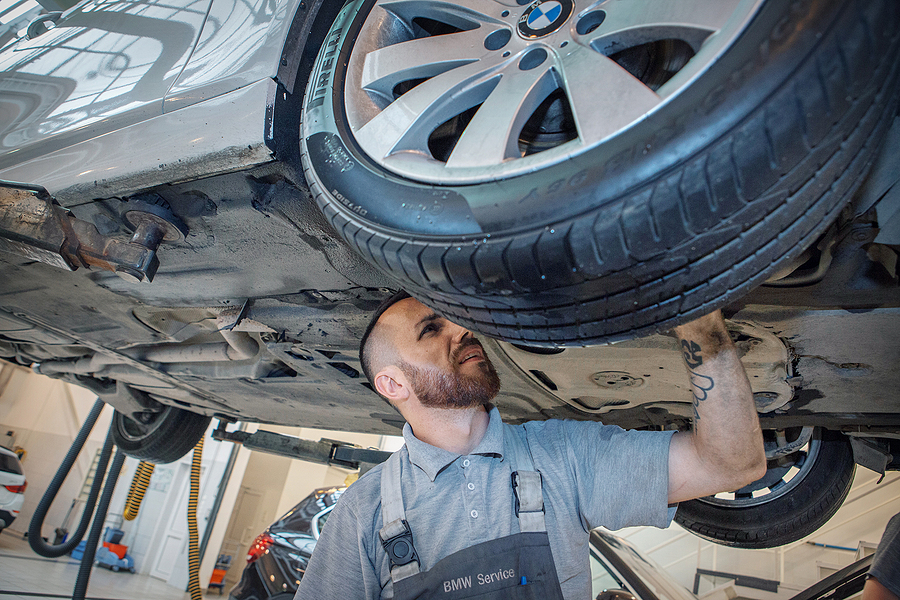
BMW Drivetrain Fault Diagnosis and Repair Costs
When a drivetrain fault appears, your BMW stores a code in one of two modules: the DME (Digital Motor Electronics) handles engine codes, while the EGS or AGS module stores transmission codes. A technician uses a BMW-specific OBD-II scanner to read these codes and pinpoint the source.
Fault codes rarely tell the whole story on their own. A single “drivetrain malfunction” warning can point to worn spark plugs, failing ignition coils, a struggling high-pressure fuel pump, a clogged catalytic converter, or a genuine transmission problem. Accurate diagnosis matters, because it prevents you from paying to replace parts that were never broken.
What repairs typically cost
Costs vary widely based on the underlying issue:
- Minor fixes (sensor replacements, software updates): $100–$500
- Transmission repairs: $1,000 to more than $5,000 if a rebuild or replacement is needed
- Full automatic transmission replacement: $5,000–$10,000, including parts, labor, taxes, and fees
- Engine-related repairs: anywhere from a few hundred to several thousand dollars
Several factors affect the final bill: your specific model, the parts you choose, local labor rates, and whether related components need attention at the same time.
Parts Procurement for BMW Drivetrain Repairs
Where your parts come from has a real effect on both cost and quality.
Genuine OEM parts are made to match the exact components installed at the factory. They fit perfectly, meet strict heat and pressure standards, integrate cleanly with your car’s onboard computers, and often carry a warranty. The trade-offs are a higher price and, occasionally, longer lead times—some parts must ship from a central warehouse or overseas, and older models can face backorders for rare components.
Aftermarket parts come from third-party manufacturers. They cost less and are often available locally the same day. Some performance brands even exceed factory specs. The risk is inconsistent quality: a poor fit can trigger warning lights, damage nearby systems, and many aftermarket parts don’t include a labor warranty if they fail early.
For most drivetrain repairs, OEM parts are the safer choice—especially if your BMW is still under warranty. Aftermarket and used car parts can make sense on older vehicles where repair costs approach the car’s value.
BMW Drivetrain Repair Timeline
Timelines depend heavily on the problem and parts availability.
- Diagnosis: typically 1–2 hours
- Minor repairs (sensors, fluid service): a few hours
- Clutch replacement: often 5–8 hours of labor
- Differential repairs: usually 1–3 days
- Transmission rebuilds or replacement: several days to a couple of weeks
The biggest variable is parts. OEM components on backorder can stretch a job from days into weeks, while readily available parts keep things moving. A BMW repair center can generally expedite orders or source components through their supplier network to shorten the wait.
Common BMW Drivetrain Issues and Solutions
Transmission Problems
Transmission faults are among the most common drivetrain triggers. Watch for slipping gears, harsh or delayed shifts, fluid leaks, and a transmission stuck in a single gear during limp mode. Diagnosis starts with a scan of the EGS/AGS module, followed by a fluid inspection.
Minor issues—like a failed sensor or low fluid—are affordable to fix. But worn internal gears or a failing valve body often push you toward a rebuild or replacement, which is where costs climb from $1,000 into the $5,000–$10,000 range.
Differential and Axle Issues
The differential distributes power to the wheels. Signs of trouble include whining or clunking noises, vibrations, and fluid leaks around the rear of the car. Worn gears or damaged bearings reduce efficiency and can set off a drivetrain warning.
Some differential problems can be repaired by replacing seals, bearings, or gears. When internal damage is severe, full replacement becomes the smarter long-term fix. Repairs generally take one to three days depending on parts.
Clutch System Failures
Manual BMWs rely on the clutch to transfer power between the engine and transmission. A failing clutch will slip, shudder, or become difficult to press. Eventually, the engine revs but the car won’t accelerate.
Clutch replacement typically runs 5–8 hours of labor. According to RepairPal (2026), a BMW 330i clutch replacement averages $1,800–$2,401, with labor at $683–$1,002 and parts at $1,117–$1,399. Costs differ by model—a 328i averages around $1,560–$1,907, while an X5 runs closer to $2,145–$2,586.
To extend clutch life, avoid riding the pedal, address fluid leaks promptly, and shift smoothly. Because oil or transmission fluid leaks can ruin a new clutch, many shops recommend replacing the rear main seal or input shaft seal at the same time as insurance against future repairs.
Frequently Asked Questions
How long do BMW drivetrain repairs typically take?
It ranges from a few hours for minor fixes to one to two weeks for a full transmission rebuild. Diagnosis alone usually takes 1–2 hours, and parts availability is the biggest factor in longer jobs.
What is the average cost of a BMW transmission repair?
Transmission repairs range from $1,000 to more than $5,000. A complete automatic transmission replacement can cost $5,000–$10,000 once parts, labor, and fees are included.
Should I use OEM or aftermarket parts?
OEM parts offer the best fit, reliability, and warranty protection, making them ideal for newer or still-under-warranty vehicles. Aftermarket parts cost less and suit older BMWs where repair costs approach the car’s value.
Can drivetrain issues affect my warranty?
Yes. Using non-OEM parts or skipping documented service can jeopardize warranty coverage. Genuine parts and professional repairs help preserve both your warranty and resale value.
Keep Your BMW Running the Way It Should
A drivetrain fault is never a problem to ignore. Driving in limp mode for too long can turn a manageable repair into a far more expensive one. The sooner you get an accurate diagnosis, the more options—and money—you’ll save.
Expert diagnosis makes all the difference. Precise fault reading, quality parts, and skilled hands protect your BMW’s performance and value for the long haul.
If you’re dealing with a drivetrain warning, bring your BMW to Autohaus Dierolf in Carmel, Indianapolis, Indiana. Our German, factory-trained mechanics deliver expert drivetrain service you can trust. Get in touch today to schedule your diagnosis.
Related Posts:
The Nuances of BMW Repair and Auto Service
How to Extend the Life of Your BMW with Regular Care
7 Tips for Keeping Your BMW Running Smoothly